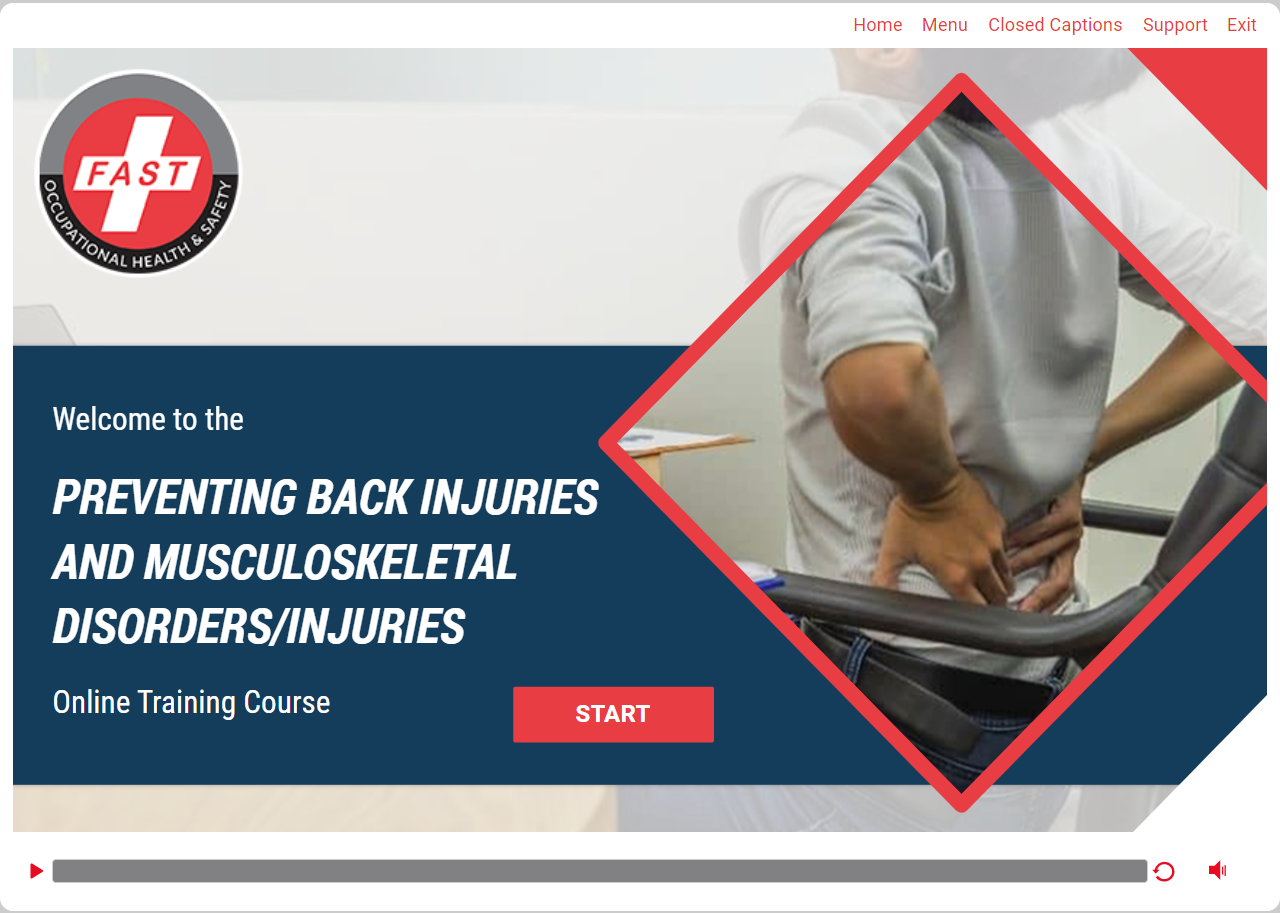
Preventing Back Injuries and MSD/MSI Training
(E-SPBI-E)
Introduction to Preventing Back Injuries Course.
Occupational Health and Safety (OHS) – Online Preventing Back Injuries And Musculoskeletal Disorders/Injuries
Once you start the course, you can pause it as needed. The course will automatically bookmark and you can resume it where you left off.
The course is fully narrative and AODA compliant. The topics are explained in detail, represented by relevant images and activities to confirm understanding.
At the end of the module, there is a final test to gauge learners understanding.
PREVENTING BACK INJURIES AND MUSCULOSKELETAL DISORDERS/INJURIES TRAINING COURSE OUTLINE
1. INJURIES
Injuries are harm or damage inflicted on the body, often resulting from accidents, falls, impacts, or other harmful events. Acute or immediate injuries to the back can be caused by tearing or straining ligaments and muscles.
2. PREVENTING INJURY
Preventing injury involves taking proactive measures and precautions to avoid harm or damage to the body. The best way to prevent back injuries is to develop habits that reduce the strain placed on the back.
3. AVOID LIFTING AND BENDING WHENEVER YOU CAN
Learn how to avoid lifting and bending whenever you can.
4. USE PROPER LIFTING TECHNIQUES
Learn the proper lifting techniques ways in this chapter.
5. HOW TO PREVENT BACK PAIN
Prevent back pain: maintain posture, exercise, lift correctly, use ergonomics, take breaks, manage weight, choose a good mattress, avoid smoking, stay hydrated, and manage stress. Use the correct lifting and moving techniques and other tips that are mentioned in the chapter to prevent back pain.
6. ERGONOMICS AND MUSCULOSKELETAL DISORDERS (MSD)
Ergonomics involves designing and arranging workplaces or products to suit the capabilities and comfort of individuals, aiming to enhance efficiency and well-being. Learn briefly about ergonomics, risk factors that ergonomics evaluate, and musculoskeletal disorders.
7. MUSCULOSKELETAL DISORDERS
Musculoskeletal disorders (MSD) are health conditions that affect the muscles, bones, tendons, ligaments, and other components of the body’s musculoskeletal system.
1. What is a Musculoskeletal Disorder (MSD)?
A Musculoskeletal Disorder (MSD) is a condition affecting muscles, bones, and related structures, often causing pain and limited movement. Examples include arthritis and back pain.
2. Types of Musculoskeletal Disorders
Various types of Musculoskeletal Disorders (MSDs) include conditions like arthritis, osteoporosis, and back pain, each affecting different parts of the body’s musculoskeletal system.
Apart from it, also learn about the following in this course:
1. Mechanism of Injury: The mechanism of injury refers to how an injury occurs, outlining the specific actions, forces, or events that lead to harm or damage to the body.
2. Ergonomic Hazards: Ergonomic hazards are conditions in the workplace that can lead to physical discomfort, strain, or injuries due to factors like poor posture, repetitive movements, or uncomfortable workstations.
3. Other Factors: Other factors are additional elements or considerations that contribute to a situation, even though they may not be explicitly mentioned.
4. Warning Signs: Warning signs are indications or signals that alert individuals to potential dangers, issues, or situations that require attention.
8. STAGES OF INJURY
Stages of injury describe the various phases an injury goes through, from the moment it happens to the recovery process. The stages of injury are categorized into three stages – stage 1, 2, and 3.
9. ASSESSING THE WORKPLACE
Assessing the workplace means evaluating conditions to identify and address potential risks for the safety and well-being of employees. Assessing the workplace is an important step in preventing workplace injuries, particularly those related to musculoskeletal disorders.
One critical aspect of this assessment is including the workers themselves in the process. Workers have first-hand knowledge of their job requirements and can identify areas that cause pain, discomfort, fatigue, or frustration.
By including workers in the assessment process, their expertise can be utilized to identify potential hazards and implement solutions to improve workplace safety and prevent injuries.
Ultimately, involving workers in the assessment process can help create a safer and healthier work environment for everyone.
10. TYPES OF CONTROLS
1. Engineering
2. Administrative
3. Personal Protective Equipment (PPE)
11. TIPS FOR PREVENTION
Learn the various prevention tips such as exercising daily, balanced lifestyle, etc., to prevent back injuries.
12. SUMMARY
Some effective ways to prevent back injuries include maintaining proper posture, avoiding heavy lifting, staying active and exercising regularly, using proper lifting techniques, and stretching before physical activity. It is also important to assess the workplace and involve workers in identifying potential hazards and implementing solutions to improve workplace safety. If you experience back pain, it’s important to rest and avoid activities that aggravate the pain, apply ice to the affected area, and seek medical attention if the pain persists or is severe. By taking proactive steps to prevent back injuries, individuals can maintain good back health and improve their overall quality of life.
13. FINAL TEST
The final test evaluates learners understanding and knowledge gained from the training. It includes questions on the roles and responsibilities of the committee members, meeting procedures, safety regulations and standards, and emergency response protocols.
The test may be in the form of multiple-choice questions or choosing the correct answers. The final test is essential to ensure that the learners have comprehended the training’s key concepts and can apply them in the workplace.
- Preventing Back Injuries
- Download Certificate
Student Reviews
Feedback from students who have taken this course.